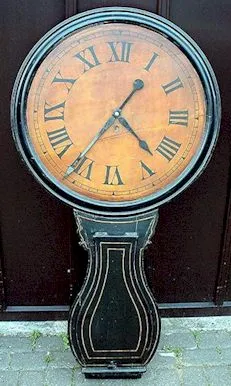
Tavern Clocks were the first clocks made for general public use and became necessary around 1730 when the first stagecoaches began to run to timetables.
Price realized Subscribers only
Sold Date Subscribers only
Sort price Subscribers only
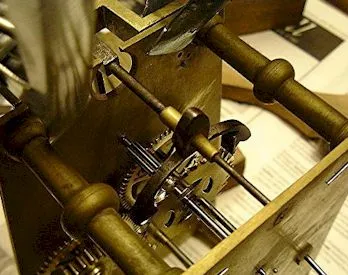
They were hung in the taverns or coaching inns used as waypoints and staging posts on route. They needed to be large and visible across a smoky crowded room. They were in use until around 1800 when conventional dial clocks became available. This clock is unusual in that it is comparatively small by tavern clock standards and has no chinoiserie decoration. We date it to circa 1795. The movement is of standard tapered plate design with five wheels in the train, the fifth wheel necessary to allow the clock to run for a week's duration despite the fairly short drop available for the weight in any tavern clock compared with a longcase clock. We purchased this clock for a customer about two years ago. The case was then in parlous condition, the original glue having long since crystallised. We carefully dismantled the case, removed the old glue and re-glued it with animal glue of the original eighteenth century specification. We are proud that this work is almost undetectable. The movement has been stripped and overhauled
Clock types